
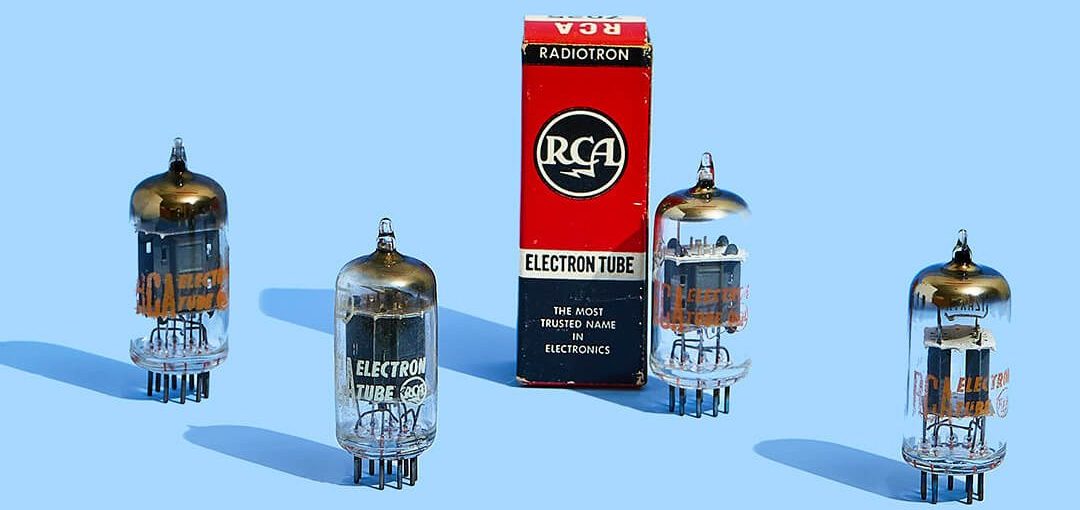
The story of the RCA 12AX7 really starts with a problem.
Between 1920 and 1940 the world rapidly changed. Radios and telephones were connecting the world. Recordings were coming to life through home stereos on the very first vinyl pressings. In the 1930’s even your car could have a radio!
And what did all of this technology have in common? TTTUBES!
At the time, most equipment relied on much larger preamp tubes like the 6SL7 and 6SN7 (which had gains of 70 and 20 respectively).
These tubes ran hotter, took up more space, and were more expensive to build. But most importantly, the world needed more volume and clarity for communications, recording, and broadcasting. A higher gain tube had to be invented.
So RCA got to work.
Deep in their labs, engineers were developing a new kind of tube. The goal was not just to make another preamp tube. The goal was to make one that could help move electronics into the future.
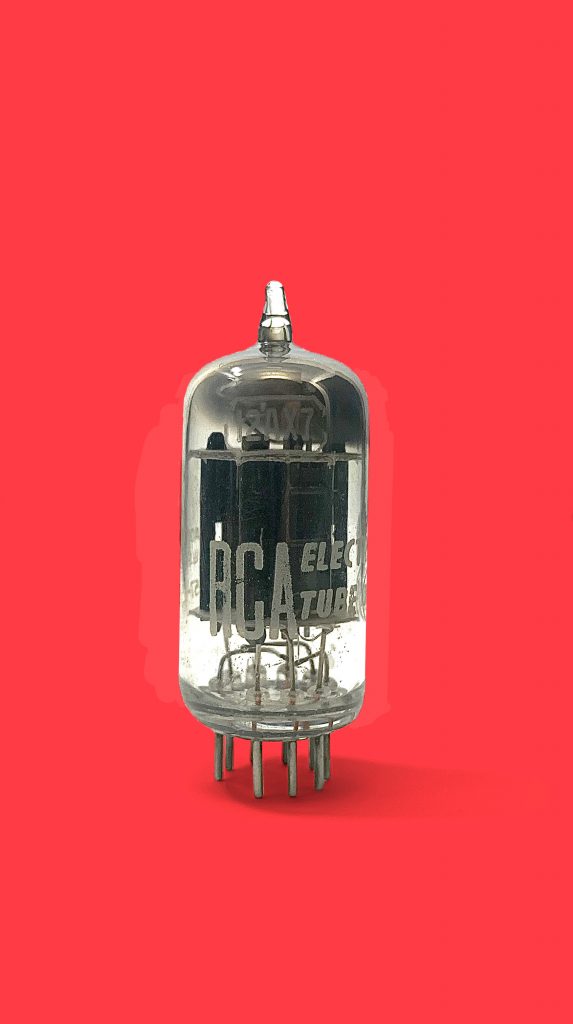
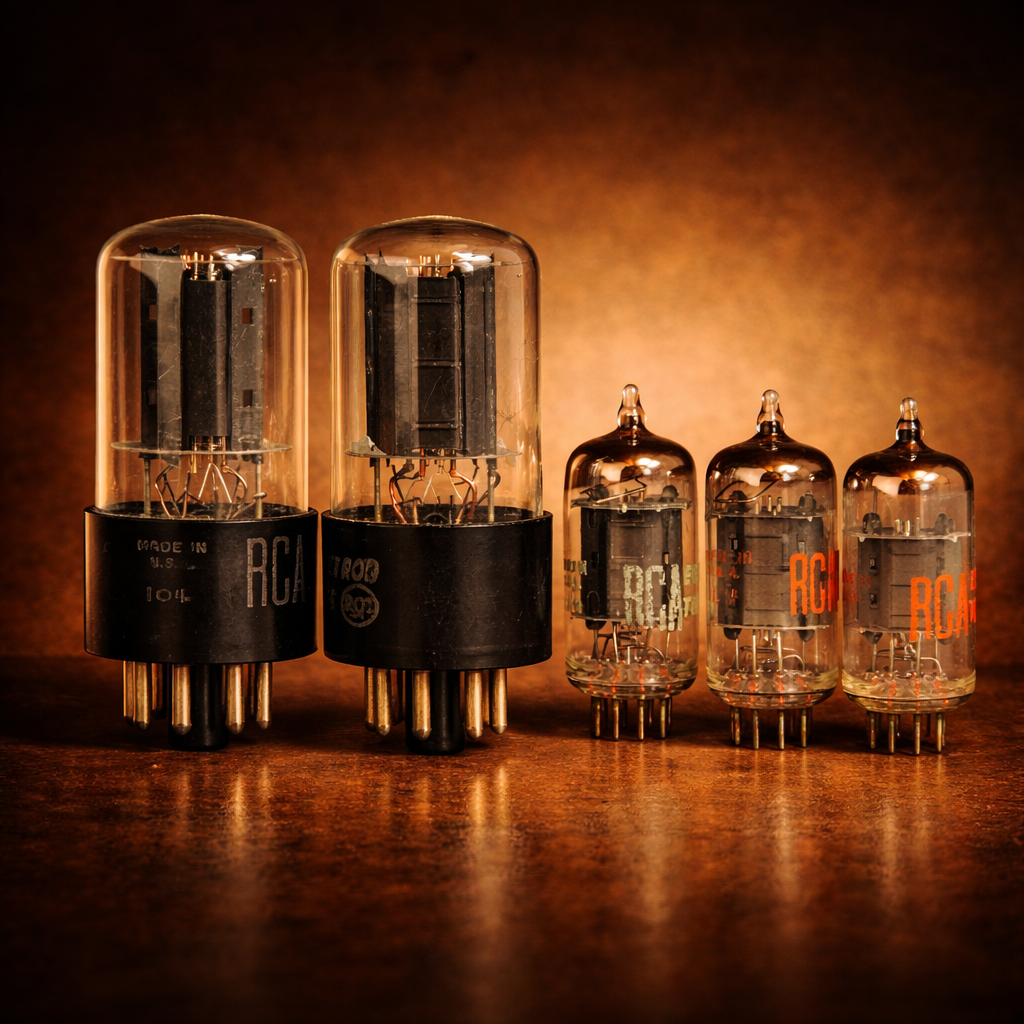
In 1946 the first RCA 12AX7 was born. A version we only now call, the all mighty black plate. It was a HUGE step forward. It was small, built on a 9-pin base, and had a gain factor of 100. That was a big!
This little tube could do more than any of the larger tubes that came before it.
and that would changed everything to this day.
Because the 12AX7 was smaller and more efficient, equipment could shrink. Designers could build more compact radios, cleaner sounding hi-fi gear, and more powerful guitar and HiFi amplifiers. The tube helped engineers do more with less space. It fit perfectly into a world that was rapidly modernizing after World War II, when companies were racing to build better consumer electronics, better communications equipment, and better audio systems.
But the early RCA 12AX7 black plate was not perfect.
Like all vacuum tubes, it wore out. It could fail. And in that era, that really mattered. Tubes were not just sitting inside guitar amps for fun. They were inside radios, military communications gear, studio equipment, and all kinds of machines people depended on. If one tube went bad, it could cause noise, failure, or even bring down an entire piece of equipment.
So reliability became the next big challenge.
That pushed companies like RCA to keep improving their designs. Over time, the 12AX7 changed. RCA moved away from the early black plate style and later versions were built with reliability and consistency more in mind. As manufacturing improved, these tubes became better suited to the demands of a world that needed electronics to work longer, quieter, and more dependably.
And yet, the black plate never lost its reputation.
That is why people still talk about it today. Even though later versions could be cleaner and more reliable, many listeners feel the early black plate tubes have a warmer, richer, more textured sound. The 12AX7 is not just a piece of electronics. It is a piece of history.
It represents the moment when audio gear got smaller, louder, and more capable — and in many ways, we are still living in the world the 12AX7 helped create.
Decades later, the 12AX7 is still used in guitar amps, hi-fi preamps, phono stages, studio gear, microphone preamps, and countless boutique audio designs. That says a lot. Most technology gets replaced and forgotten, but the 12AX7 never really went away. Its mix of high gain, small size, and musical character made it so useful that designers kept building around it, generation after generation. What began as a breakthrough in the late 1940s is still shaping the sound of modern audio today.
And the RCA 12AX7 black plate represents the beginning of that stor