
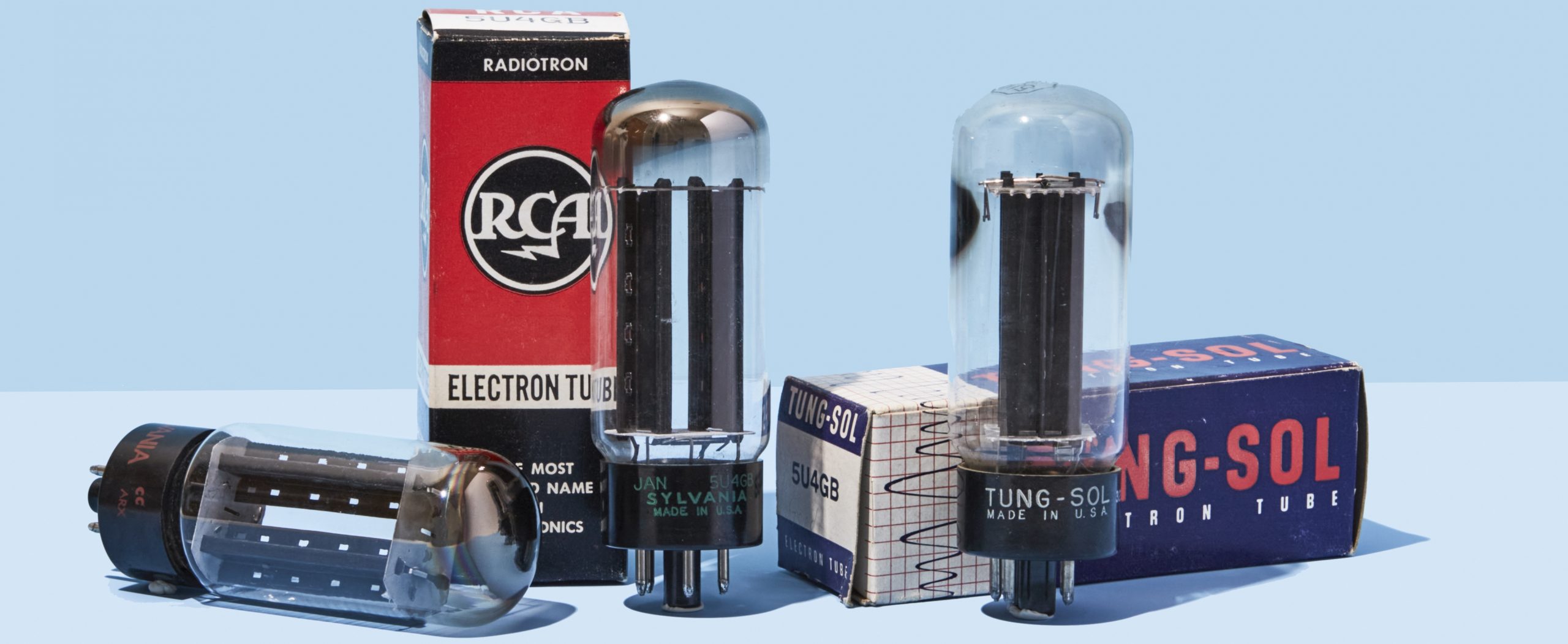
If you’ve spent any time shopping for tubes, you’ve probably asked the same question most players and hi-fi listeners do early on: are vintage vacuum tubes actually better than new production tubes, or is it all just hype?
The honest answer is that vintage tubes really are different, and in many cases they’re better—but not always, and not for everyone. Understanding why they earned their reputation helps separate real advantages from mythology, and it also makes it easier to know when modern tubes are the smarter choice. If you’re brand new to this world, our Tube Buyer’s Guide is a good place to start before diving too deep.
Why Vintage Vacuum Tubes Are Built Differently
A big part of what sets vintage vacuum tubes apart comes down to materials. During the golden age of tube manufacturing, roughly from the 1940s through the 1970s, tubes were being built for military, broadcast, and industrial use. Reliability mattered more than cost. Companies were using thicker nickel plates, higher-purity metals, and cathode coatings designed to last for thousands of hours under continuous operation.
Manufacturing moved slower, quality control was stricter, and tolerances were tighter. Many of those materials and processes either aren’t available anymore or aren’t economically viable in today’s market, which is why modern tubes are built differently. These construction choices are a big reason vintage tubes behave the way they do, especially when it comes to stability and noise.


Consistency, Longevity, and Why NOS Tubes Matter
Tone gets most of the attention, but another advantage of good NOS tubes is consistency and lifespan. Vintage tubes of the same type often test closer to one another, tend to be quieter, and are less prone to microphonics—especially in critical positions like the first gain stage or phase inverter.
Many NOS tubes were originally designed to run for ten thousand hours or more in radios, laboratory equipment, and hi-fi systems. Guitar players benefit from that same overbuilt approach, particularly in positions where noise, balance, and feel matter more than raw gain.
When New Production Tubes Actually Make Sense
It’s also important to be honest about where modern tubes fit into the picture. New production tubes absolutely make sense in certain situations. If you’re retubing a high-gain amp that burns through preamp tubes, need affordable backups for touring, or want to experiment without risking increasingly rare inventory, modern tubes are often the right call.
They’re readily available, cost-effective, and in many cases perfectly usable. Some modern designs even perform very well in specific roles. Vintage tubes aren’t about nostalgia or elitism—they’re about getting the most stable, musical version of a circuit when it matters most.
Vintage Vacuum Tubes: The Bottom Line
Vintage vacuum tubes earned their reputation because they were built with better materials, designed to last longer, and manufactured to tighter standards. They aren’t magic, and they aren’t always necessary, but in the right position, a well-tested NOS tube can make a real and audible difference.
Less hype. More signal.